Showing posts with label computer. Show all posts

Tuesday, May 17, 2022

The invention of USB (Universal Serial Bus)

A bus is a communication pathway in a digital computer that allows data to flow between the central processing unit (CPU) and its memory and between among the CPU and peripheral devices. The bus played a key role in the development of the modern desktop computer in the later 1970s and 1980s.

It was developed and invented by Ajay Bhatt while working for Intel. He won the prize together with his team consisting of BalaCadambi, Jeff Morriss, Shelagh Callahan and Shaun Knoll for inventing the USB technology.

Frustrated with process of reconfiguring and rebooting the computer while installing a printer for his wife’s computer, Bhatt decided to create a connection interface that would recognize and run new devices automatically when they were plugged into computer.

USB is intended to replace many varieties of serial and parallel ports. The first silicon for USB was made available by Intel in 1995. The aim was to bring serial-port and serial bus technology into the twenty first century.

The USB 1.0 specification was introduced in January 1996. The original USB 1.0 specification had a data transfer rate of 12 Mbit/s. The first widely used version of USB was 1.1, which was released in September 1998.

The USB 2.0 was released in April 2000, and was standardized by the USB-IF at the end of 2001, was widely accepted by HP, Intel.
The invention of USB (Universal Serial Bus)


Wednesday, December 22, 2021

Invention and history of Macintosh computer

In 1979 the Macintosh personal computer existed only as the pet idea of Jef Raskin, a veteran of the Apple II team, who had proposed that Apple Computer Inc. make a low-cost "appliance"-type computer. Raskin wanted to create a computer for the average consumer, which could be operated without spending much time reading a manual.

Named in honor of Raskin's favorite edible apple (the McIntosh), the Macintosh had been in the works since 1979, so when Jobs joined the team it was already well advanced.

From the beginning, the Macintosh project was powered by the dedicated drive of two key players on the project team. For Burrell Smith, who designed the Macintosh digital hardware, the project represented an opportunity for a relative unknown to demonstrate outstanding technical talents.

For Steven Jobs, the 29-year-old chairman of Apple and he had a clear vision of the product from the beginning.

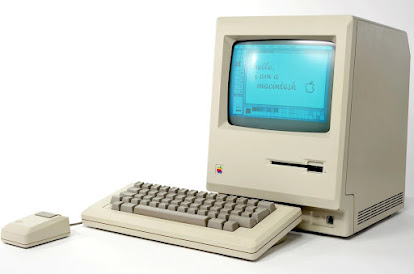
In 1984, Apple released the Macintosh, which provided advanced graphics capabilities and a revolutionary Graphical User Interface.

Macintosh is a platform of desktop computers targeting the home, educational, and professional markets. Included in this line are the iMac, which helped Apple recapture success in the personal computer market; the Mac mini, a tiny desktop computer targeting price-conscious consumers; and the Mac Pro, a series of high-performance machines.

The original Mac was the first affordable personal computer to feature a menu-driven, graphical user interface. It also came with a built-in monitor, keyboard, mouse, and a more compact 3.5" floppy drive.

Mouse was developed by Douglas Englebart of the Stanford Research Institute, the point-and-click interface replaced the cumbersome commands of MS-DOS with an intuitive, elegant means of interaction.

Between 1984 and 1985, Apple's net income fell 17% due to poor follow-up sales of the Macintosh computer. Jobs was forced out of the company, while CEO John Sculley, who was previously brought into the company by Jobs, assumed control. Later risky ventures such as the Newton PDA caused market share and stock price to drop at an alarming rate.
Invention and history of Macintosh computer

Sunday, December 10, 2017

History of computer mouse

Invented by Douglas Engelbart in 1963, the mouse was destined to fundamental change the way humans interact with computers. It was invented at the federal government’s Augmentation Research Unit Center.

Over the next few years he and his colleague Bill English have built a three-button, two-wheel, palm-sized contraption that they dubbed a mouse. Instead of typing commands, a user could manipulate a mouse to control an on-screen tracking symbol, or cursor.

In 1972, Jack Hawley and Bill English came up with a mouse based on a single ball, pressed against two rollers, instead of the original two wheels, to track movement.

In 1982, Xerox released its 8010 star computer that came with an integral, two button mouse. This was an innovative machine, but it failed commercially because of its high price.

Microsoft developed its own version of the mouse and released it in June 1983. It engineers has been able to power the mouse through the serial port and they patent the invention.

Although initially there was no software for using the mouse, by November 1983 Microsoft was able to release Word, its word-processing software, which supported the mouse and has many features that used the mouse.

The mouse became an integral part of personal computers, especially in 1984, with the release of the Macintosh computer. The first mouse model was mechanical and developed in Lausanne, Switzerland.

Apple Computer, the first personal computer company to announce a system – the Lisa – that uses a mouse to control all applications, uses a single-button mouse.

Also in 1984, Microsoft started shipping its IBM PC mouse, a low price device had two buttons.
History of computer mouse

Thursday, November 9, 2017

Invention history of personal computer

Before the introduction of the microprocessor in the middle 60’s and early 1970s, computers were generally large costly systems owned by large corporations, universities, government agencies and similar-sized institutions.

The first of the programmable pocket calculators was Hewlett-Packard’s HP-65, introduced in early 1974 for $795.

Texas Instruments and other followed. As powerful as they were, the trade press was hesitant to called computers, even if Hewlett-Packard introduced the HP-65 as a ‘personal computer’ (possibly the first use of that term in print).

In April 1974, Intel introduced the 8080 microprocessor, which was 10 times faster than the earlier 8008 chip and addressed 64 KB of memory.

In July 1974, Radio –Electronics described the Mark-8 and featured Johnathan Titus, who developed early personal computer which though not commercially produced.
In late December 1974, subscribers to Popular Electronics received their January 1975 issue in the mail, with the prototype of the ‘Altair’ minicomputer on the cover, and article describing how readers could obtain Altair kit for less than $400 and had to be assembled. The Altair kit, considered the first personal computer, included an 8080 processor, a power supply, a front panel with a large number of lights and 256 bytes of memory.

The designers hoped to sell a few hundred build-it-yourself kits to hobbyist and were surprised when they sold thousands in the first month.

H. Edward Roberts, the Altair’s designer, served as credit as the inventor of the personal computer. The Altair was a capable, inexpensive computer designed around the Intl 8080 microprocessor.

IBM introduced their first personal computer in September 1975, six years before the IBM PC. The model 5100 had 16 KB of memory, a built in 16 line-by-64-character display, a built in BASIC language interpreter and a built-in DC-300 cartridge tape drive for storage.

In 1977, Apple Computer Corporation founded by Steve Jobs and Steve Wozniak, released Apple I containing a system board with 4 KB of RAM. It sold for $666.66.
Invention history of personal computer

Monday, September 25, 2017

The invention of digital music

In the early 1980s, a computer program was developed that caused a major shift in the music universe. The way people listen to music changed dramatically.

Digital music affects more than the way consumers purchase their favorite tunes; it also affects how music is recorded.

In 1983 there was a creation of the Musical Instrument Digital Interface (MIDI). The rise in a number of digital synthesizers and sequencers, as well as the ease of interconnecting different components through the MIDI, led to a growth in electronic music in the late 1980s and onwards.

One of the significant aspects of the innovations was their affordability, which reflected the ever–decreasing costs of microprocessor. This put powerful music making capabilities into the hands of average consumers.
iPod

Digital recording made its way into studios in the 1990s. Replacing older analog tape recorders, and thus changing the whole nature of recording industry.

The late 1990s and early 200s saw the increasing permeation of computers into the domestic sphere. In tandem, more music began to be produced on computers: hardware began to be complemented by software and a variety of different music was increasingly produced on desktops and laptops.

In 2008 the international digital music grew by roughly a quarter, to a value of $3.7 billion. Apple was by no means the innovator in digital music players, but they made the most attractive one, with the largest capacity and then marketed it to perfection.

In April 2008 Apple announced that the ‘iTunes Store’, its online digital music outlet, had become the largest music retailer in the US, surpassing Wal-Mart, the dominant physical retail chain.
The invention of digital music

Tuesday, June 20, 2017

History and invention of internet

The internet was created by a collection of visionaries and executed by hundred of individuals whose contributions helped develop the technology.

In the late 1960s the US Department of Defense fearful of the intentions and capabilities of the enemies, created a distributed network that linked military computers together.

During 1940s and early 1950s, many of the graduate students and scientists at MIT and Lincoln Laboratory gained the preliminary experience necessary to create network computers. One of the engineers from Lincoln was Lawrence Roberts, who later became a founding father of the internet.

The first experimental network using internet-like technology involved four supercomputers and was built in 1969.

The Advanced Research Projects Agency Network (ARPAnet) was set up in 1969 and was one of the world's first operational packet switching networks. It evolved into several innovations in the early 1970s such as e-mail, a file transfer protocol that allows data to be sent in bulk and remote connecting service for network computers. As the project grew during the next decade, students were gained access to ARPAnet as hundreds of college and university networks were connected to it.

Starting in 1972, hundreds and then thousands of early users began to discover electronic mail as a new basis for communication.

In 1986, the NSF (National Science Foundation) launched the NSFNET backbone, a high speed network connection between six supercomputer centers running across the United States.

Within nine years, The NFSNET backbone grew from 6 nodes at 56 kbs to 21 nodes at 45 mbs, connecting 50,000 networks on all seven continents. In 1995 NSF turned the management of the World Wide Web portion of the internet over a group of public company.

The word internet entered the common lexicon in or about November 4, 1988 when many large American newspaper first mentioned the network in their coverage of computer.
History and invention of internet

Tuesday, November 3, 2015

The invention of the first spreadsheet VisiCalc

The first spreadsheet on a personal computer was called VisiCalc (short for visible calculator) and was created by Daniel Bricklin and Bob Frankston in 1978.

Bricklin, first year student at Harvard Business School, had to perform some analytical tasks as part of his case study. He had two options to do it, either do it by hand or use an awkward mainframe program.

Bricklin wondered how much easier the task would be with the aid of his Apple II computer.

It was while Bricklin was sitting on room 108 in Aldrich Hall at Harvard in 1978 that he dreamed of an easier way to calculate financial projections for multiple different business scenarios. He had managed to create the first working prototype model of his concept, which named VisiCalc. It is a program for Apple II computer which he introduced rows and columns and some arithmetic operations. He recruited Frankston to help him write the code.

At the time, Frankston was a partner in Personal Software, a company he founded with another student, Daniel Fylstar, with an initial investment of $500. They agreed to implement and armlet Bricklin’s ideas.

VisiCalc was a huge success. More than 700,000 copies of the program were sold. It was almost single handedly responsible for the success of the Apple II personal computer. By early 1980s, Lotus 1-2-3 was the leading spreadsheet. Lotus had bought and then discontinued VisiCalc. Borland’s Quattro Pro was another well-known product at that time.
The invention of the first spreadsheet VisiCalc 

Popular Posts

Other Interesting Articles