Showing posts with label Apple Computer. Show all posts

Wednesday, December 22, 2021

Invention and history of Macintosh computer

In 1979 the Macintosh personal computer existed only as the pet idea of Jef Raskin, a veteran of the Apple II team, who had proposed that Apple Computer Inc. make a low-cost "appliance"-type computer. Raskin wanted to create a computer for the average consumer, which could be operated without spending much time reading a manual.

Named in honor of Raskin's favorite edible apple (the McIntosh), the Macintosh had been in the works since 1979, so when Jobs joined the team it was already well advanced.

From the beginning, the Macintosh project was powered by the dedicated drive of two key players on the project team. For Burrell Smith, who designed the Macintosh digital hardware, the project represented an opportunity for a relative unknown to demonstrate outstanding technical talents.

For Steven Jobs, the 29-year-old chairman of Apple and he had a clear vision of the product from the beginning.

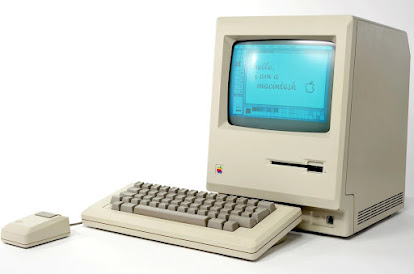
In 1984, Apple released the Macintosh, which provided advanced graphics capabilities and a revolutionary Graphical User Interface.

Macintosh is a platform of desktop computers targeting the home, educational, and professional markets. Included in this line are the iMac, which helped Apple recapture success in the personal computer market; the Mac mini, a tiny desktop computer targeting price-conscious consumers; and the Mac Pro, a series of high-performance machines.

The original Mac was the first affordable personal computer to feature a menu-driven, graphical user interface. It also came with a built-in monitor, keyboard, mouse, and a more compact 3.5" floppy drive.

Mouse was developed by Douglas Englebart of the Stanford Research Institute, the point-and-click interface replaced the cumbersome commands of MS-DOS with an intuitive, elegant means of interaction.

Between 1984 and 1985, Apple's net income fell 17% due to poor follow-up sales of the Macintosh computer. Jobs was forced out of the company, while CEO John Sculley, who was previously brought into the company by Jobs, assumed control. Later risky ventures such as the Newton PDA caused market share and stock price to drop at an alarming rate.
Invention and history of Macintosh computer
Sunday, December 10, 2017

History of computer mouse

Invented by Douglas Engelbart in 1963, the mouse was destined to fundamental change the way humans interact with computers. It was invented at the federal government’s Augmentation Research Unit Center.

Over the next few years he and his colleague Bill English have built a three-button, two-wheel, palm-sized contraption that they dubbed a mouse. Instead of typing commands, a user could manipulate a mouse to control an on-screen tracking symbol, or cursor.

In 1972, Jack Hawley and Bill English came up with a mouse based on a single ball, pressed against two rollers, instead of the original two wheels, to track movement.

In 1982, Xerox released its 8010 star computer that came with an integral, two button mouse. This was an innovative machine, but it failed commercially because of its high price.

Microsoft developed its own version of the mouse and released it in June 1983. It engineers has been able to power the mouse through the serial port and they patent the invention.

Although initially there was no software for using the mouse, by November 1983 Microsoft was able to release Word, its word-processing software, which supported the mouse and has many features that used the mouse.

The mouse became an integral part of personal computers, especially in 1984, with the release of the Macintosh computer. The first mouse model was mechanical and developed in Lausanne, Switzerland.

Apple Computer, the first personal computer company to announce a system – the Lisa – that uses a mouse to control all applications, uses a single-button mouse.

Also in 1984, Microsoft started shipping its IBM PC mouse, a low price device had two buttons.
History of computer mouse

Thursday, November 9, 2017

Invention history of personal computer

Before the introduction of the microprocessor in the middle 60’s and early 1970s, computers were generally large costly systems owned by large corporations, universities, government agencies and similar-sized institutions.

The first of the programmable pocket calculators was Hewlett-Packard’s HP-65, introduced in early 1974 for $795.

Texas Instruments and other followed. As powerful as they were, the trade press was hesitant to called computers, even if Hewlett-Packard introduced the HP-65 as a ‘personal computer’ (possibly the first use of that term in print).

In April 1974, Intel introduced the 8080 microprocessor, which was 10 times faster than the earlier 8008 chip and addressed 64 KB of memory.

In July 1974, Radio –Electronics described the Mark-8 and featured Johnathan Titus, who developed early personal computer which though not commercially produced.
In late December 1974, subscribers to Popular Electronics received their January 1975 issue in the mail, with the prototype of the ‘Altair’ minicomputer on the cover, and article describing how readers could obtain Altair kit for less than $400 and had to be assembled. The Altair kit, considered the first personal computer, included an 8080 processor, a power supply, a front panel with a large number of lights and 256 bytes of memory.

The designers hoped to sell a few hundred build-it-yourself kits to hobbyist and were surprised when they sold thousands in the first month.

H. Edward Roberts, the Altair’s designer, served as credit as the inventor of the personal computer. The Altair was a capable, inexpensive computer designed around the Intl 8080 microprocessor.

IBM introduced their first personal computer in September 1975, six years before the IBM PC. The model 5100 had 16 KB of memory, a built in 16 line-by-64-character display, a built in BASIC language interpreter and a built-in DC-300 cartridge tape drive for storage.

In 1977, Apple Computer Corporation founded by Steve Jobs and Steve Wozniak, released Apple I containing a system board with 4 KB of RAM. It sold for $666.66.
Invention history of personal computer

Popular Posts

Other Interesting Articles