Showing posts with label preservation. Show all posts

Saturday, August 20, 2016

Invention of Mason jar

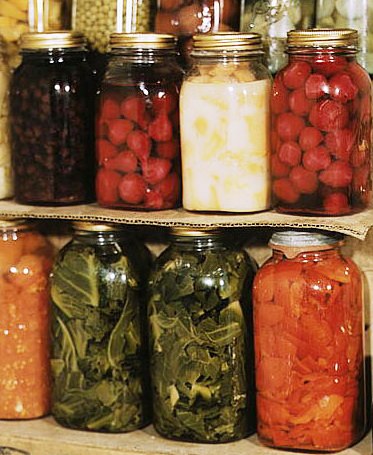
In 1858, John L. Mason (1832-1902) invented a glass jar with a threaded opening that allowed a metal cap to be screwed on for a tight seal; a rubber ring was added as a gasket to make airtight. The Mason jar revolutionized home fruit and vegetable preservation.

Born in Vineland, New Jersey, Mason grew up in Philadelphia. While still a young man he moved to New York City where he worked as a tinsmith in his own shop in Canal Street. It was in the rented room where he lived, at 154 West Nineteenth Street, that he had the idea of a glass jar to preserve fresh fruits and vegetables.
He began experimenting with metal lids for glass preserving jars as an improvement on existing methods of sealing the jars, which included corks, flat metal tops sealed with wax, or flat tops held on with wire balls or other types of clamps.

On November 30, 1858, Mason patented the self-sealing zinc lid and glass jar. In 1903, Alexander H. Kerr refined the technology with a lid that included the rubber gasket.

Prior to Mason’s invention, winter meals in America were dreary; the only available fruits and vegetables were dried. But the Mason jar allowed gardeners to seal in the harvest-time freshness of fruit and vegetables.
Invention of Mason jar

Wednesday, April 13, 2016

Quick freezing of food

The first patent (British) related to food freezing was for rapid freezing of a product by immersion on cold medium and was granted to H. Benjamin in 1842.

An innovative freezing system for fish was patented by William Davis in 1868; the fish were placed in metal containers and sealed before immersions in an ice/salt mixture.

American inventor Clarence Birdseye developed the quick-freezing process of food preservation in the 20th century. During his stay on the arctic, Birdseye observed that the combination of ice, wind and low temperature almost froze just-caught fish.

Most importantly, he also found that when such quick-frozen fish were cooked and eaten, they were scarcely different in taste and texture from how they would have been if fresh. Birdseye labored for seven years at a New Jersey icehouse to develop a method for packaging foods and rapidly reducing the temperature to freezing.

After years of work, Birdseye invented a system that packed dressed fish, meat or vegetables into waxed-cardboard cartons, which were flash-frozen under pressure. Birdseye patented the food freezing process in 1926. Fortune declared that freezing was one of the most exciting and revolutionary ideas in the history of food’.

Commercially packed fish products appeared in 1929, under the Birds Eye label, and the first retail styles frozen food packs were launched in 1939.

With the passage of the Rural Electrification Act in 1933, many rural households became members of a local rural electric cooperative and by the end of World War II; most rural homes could operate not only a refrigerator but also a home freezer.
Quick freezing of food

Popular Posts

Other Interesting Articles